
Akshardham Temple
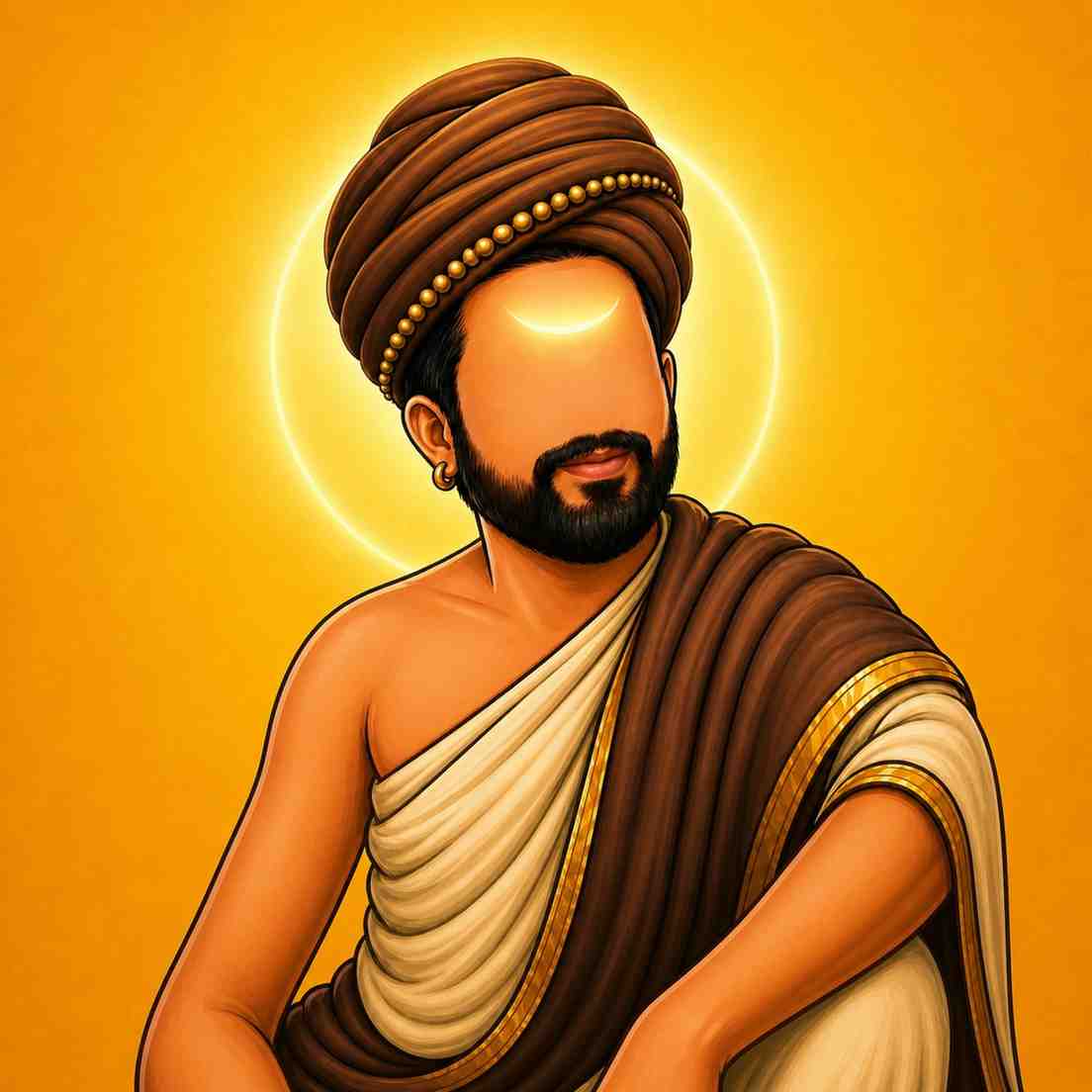
Bhagwan Swaminarayan (BAPS Swaminarayan Akshardham)
Photo: Shiprasarangi, CC BY-SA 4.0Legend
Akshardham is a modern mandir with a founding story rather than an ancient legend. Around 1968 Yogiji Maharaj, then head of BAPS, expressed the wish for a grand temple on the banks of the Yamuna. His successor Pramukh Swami Maharaj carried it out: land was allotted in April 2000, construction began on 8 November 2000, and the complex opened on 6 November 2005, dedicated to the nation in the presence of President A.P.J. Abdul Kalam. Some 7,000 carvers and 3,000 volunteers built it in five years. The central dome holds a 3.4-metre gilded murti of Swaminarayan.
Why this temple matters
In 2007 Guinness World Records named Akshardham the world's largest comprehensive Hindu temple. The mandir is 109 metres long, 96 wide and 43 high, with 234 carved pillars, nine domes and over 20,000 murtis. It is built of Rajasthani pink sandstone and Italian Carrara marble with no steel or concrete. Its plinth, the Gajendra Pith, carries 148 life-size stone elephants. Around it are the Yagnapurush Kund stepwell with 2,870 steps and 108 shrines, the Narayan Sarovar holding water from 151 rivers and lakes, and three exhibitions on Swaminarayan's life and Indian culture.
What devotees pray for here
Peace & Family Harmony
Visitors come to Akshardham for stillness in the middle of Delhi. At the Abhishek Mandap devotees pour water over the murti of Neelkanth Varni, the teenage yogi form of Swaminarayan, while offering what the mandir describes as a prayer for peace and the fulfilment of wishes. Many sit through the morning or evening arti, walk the Narayan Sarovar and the gardens, and keep the Hall of Values' themes of non-violence, prayer and family harmony as a practice to carry home.
Education & Exams
Families bring children here to learn as much as to pray. The Hall of Values tells Swaminarayan's teachings through fifteen dioramas with robotics, the Neelkanth Darshan film follows the seven-year pilgrimage he began as a boy of eleven, and the Sanskruti Vihar boat ride passes through ten thousand years of Indian learning, from the Vedic sages to ancient universities. School groups are received by prior booking. Parents traditionally offer the abhishek and an arti prayer for their children's studies and perseverance, one of the Hall's own themes.
Festivals
- Daily Mandir Arti (10:30 AM and 6 PM, Tuesday to Sunday): the lamp ceremony before the murtis
- Sahaj Anand Water Show (nightly after sunset, about 7:30 PM): a 24-minute multimedia performance at the Yagnapurush Kund
- Anniversary of the inauguration (6 November): the complex was dedicated to the nation on this day in 2005
Poojas & rituals
- Mandir darshan of the murtis in the garbhagruh, free of charge
- Arti at 10:30 AM and 6 PM
- Abhishek of Neelkanth Varni: pouring holy water over the murti with a prayer, 10 AM to 8 PM, for a small donation
- The three exhibitions: Sahajanand Darshan (Hall of Values), Neelkanth Darshan film and Sanskruti Vihar boat ride, by ticket from 11 AM to 6 PM
- Sahaj Anand water show after sunset
- Walking the Gajendra Pith, Narayan Sarovar and the Garden of India; note that poojas here are done in person, not booked remotely
Personal predictions for your own birth chart, pooja booking and prasad delivery are in the SantoBaba app.
How to reach
Akshardham Metro Station on the Blue Line is a 350-metre walk from Gate 1. From Indira Gandhi International Airport it is about 21 km (Orange Line to New Delhi, Yellow Line to Rajiv Chowk, Blue Line to Akshardham). New Delhi Railway Station is 11 km, about 40 minutes by metro, and Hazrat Nizamuddin station is 6 km away. The complex is on NH 24 near the Noida border.
Timings
Open Tuesday to Sunday from 10 AM; closed on Mondays. Last entry is 6:30 PM; mandir darshan and the Abhishek Mandap run till 8 PM. Exhibition tickets are sold from 11 AM to 6 PM, and the water show begins after sunset, currently about 7:30 PM. Allow four to five hours for everything.
Rules & dress code
Entry to the complex and mandir is free; the exhibitions and water show are ticketed. Mobile phones, cameras, electronics, bags, food, drink, tobacco and toys are not allowed inside and must be left in the free cloakroom; wallets, water bottles and baby food are permitted. Dress must cover shoulders, chest, back and upper arms and reach below the knee; sarongs are available at the gate. Everyone passes a security check.
Frequently asked questions
Is Akshardham Delhi open on Monday?
No. It is closed every Monday and open Tuesday to Sunday from 10 AM, with last entry at 6:30 PM.
Is there an entry fee for Akshardham?
No. The mandir, Gajendra Pith and gardens are free. Only the three exhibitions and the evening water show need tickets.
Can I take my phone inside Akshardham?
No. Phones, cameras and electronics must be deposited at the free cloakroom before the security check.
Can SantoBaba book a pooja at Akshardham for me?
Akshardham's abhishek and arti are done in person and there is no sponsored-pooja system, so SantoBaba offers guidance for your visit rather than a remote ritual here.
Photo gallery


Other temples for Peace & Family Harmony: Badrinath Temple · Golden Temple · Jagannath Temple · Kapaleeshwarar Temple · Kashi Vishwanath Temple · Kedarnath Temple · Meenakshi Amman Temple · Ramanathaswamy Temple · Sabarimala Temple · Shirdi Sai Baba Temple · Sri Kanaka Durga Temple · Sri Mallikarjuna Swamy Temple · Sri Sita Ramachandra Swamy Temple
Other temples for Education & Exams: Chilkur Balaji Temple · Siddhivinayak Temple